 |
| Cara's New Novel |
Monday, April 15, 2013
Author Cara Black

Sunday, March 31, 2013
Illuminations - Treasures of the Middle Ages - BBC
Art critic Andrew Graham-Dixon visits an exhibition at the Fitzwilliam Museum, Cambridge, which contains a treasure trove of the world's most important illuminated manuscripts. Germaine Greer joins the modern-day illustrator Quentin Blake to consider the religious and political power of these beautiful medieval masterpieces, and to assess their place in the history of art and book production.
https://www.youtube.com/watch?v=zuME-DcksYo&noredirect=1
https://www.youtube.com/watch?v=zuME-DcksYo&noredirect=1
Tuesday, March 26, 2013
Making Manuscripts, Getty Museum
An illuminated manuscript is a book written and decorated completely by hand. Illuminated manuscripts were among the most precious objects produced in the Middle Ages and the early Renaissance, primarily in monasteries and courts. Society's rulers--emperors, kings, dukes, cardinals, and bishops--commissioned the most splendid manuscripts.
https://www.youtube.com/watch?v=1aDHJu9J10o
https://www.youtube.com/watch?v=1aDHJu9J10o
Tuesday, April 24, 2012
Beetles


Monday, April 2, 2012
Nurnberg - Germanic National Museum and Albrecht Durer
Our tour came to an end in Nurnberg (Nuremberg). We visited the Germanic National Museum, the Albrecht Durer House, a medieval outdoor market and sampled the awesome and famous Bavarian gingerbread. I must say, this was the best gingerbread I have ever eaten! Yum!
Nuremberg was founded around the turn of the 11th century. Nuremberg is often referred to as having been the 'unofficial capital' of the Holy Roman Empire, particularly because Imperial Diet (Reichstag) and courts met at Nuremberg Castle. The Diets of Nuremberg were an important part of the administrative structure of the empire. The increasing demand of the royal court and the increasing importance of the city attracted increased trade and commerce to Nuremberg. The cultural flowering of Nuremberg, in the 15th and 16th centuries, made it the centre of the German Renaissance. Between 1945 and 1946, German officials involved in the Holocaust and other war crimes were brought before an international tribunal in the Nuremberg Trials.
We toured the Albrecht Durer House which was Dürer's residence between 1509 and 1528. Of particular interest was the large painting and printing workshop from Dürer's time where artistic techniques are demonstrated.
 |
| Statue of Albrecht Durer |
 |
| Albrecht Durer House |
 |
 |
| Engraving Tools |
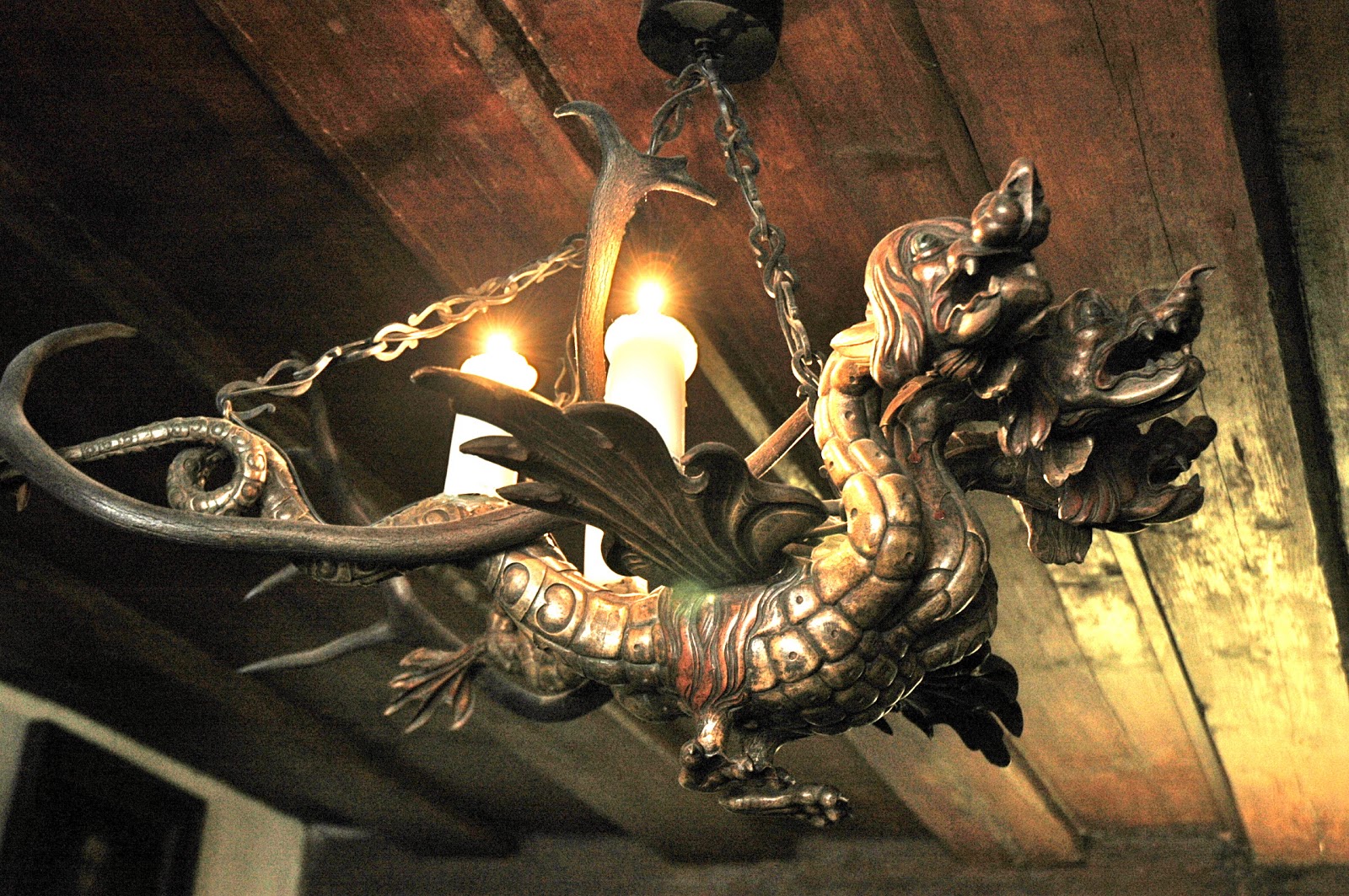 |
| Dragon Chandelier |

 |
| Printing Press |
The Germanic National Museum is one of Europe's largest and greatest museums. Its incomparable stores of exceptional art and artisanship afford a panoramic overview of the cultural history of German-speaking central Europe. It boasts of the Albrecht Durer collections and the unique Codex aureus, produced in the 10th century.
 |
| St. George Killing the Dragon |
Faber-Castell
 |
| Faber-Castell Castle |
 |
| Architectural Detail |
 |
| Grand Staircase |
 |
| Ceiling Detail |
 |
| Pencil Factory |
 |
| Print of Factory |
 |
| Graphite |


We toured the Faber-Castell home and factory. Faber-Castell is one of the world's largest manufacturers of pens, pencils and art supplies, as well as high-end writing instruments and luxury leather goods. Founded in 1761 at Stein near Nurnberg by cabinet maker Kaspar Faber, the enterprise remained in the Faber family for eight generations.
Saturday, March 31, 2012
Pharmacy Museum, Heidelberg Castle
 |
| Heidelberg Castle |
The castle has a history almost as old as the city itself. The first parts of the castle were constructed around 1300, but it wasn’t before Prince Elector Ruprecht III (1398 – 1410) that the castle was used as a regal residence. Until it was destroyed by lightning in 1764 leaving it permanently uninhabitable, the castle was the residence for most of the Prince Electors. In 1800, Count Charles de Graimberg began the difficult task of conserving the castle ruins. Up until this time, the citizens of Heidelberg had used the castle stones to build new houses.
Just as breath-taking as the castle is from the city, so too is the city from the castle. From either the Great Terrace or the gardens, one has an amazing view of Heidelberg, the Neckar River, and the Neckar valley far into the Rhine plain. On a clear day, Mannheim is even visible on the horizon.
 |
| Red Roofs, Heidelberg |
 |
| Heidelberg |
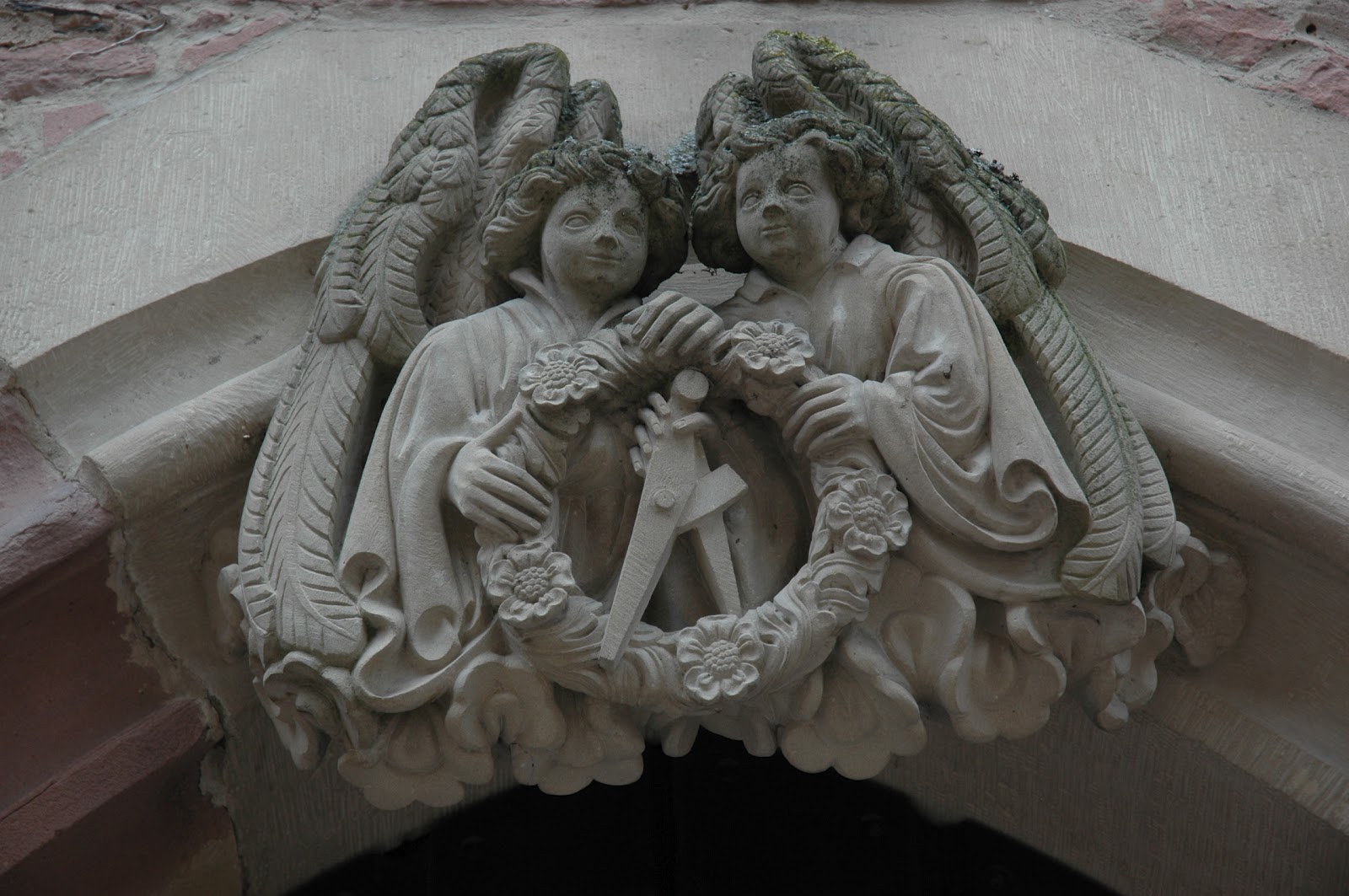 |
| Putti |
The German Pharmacy Museum's collection of over 20.000 objects represents the rich history of medical sciences, especially the history of pharmacy.
Housed in one of Germany's architectural landmarks, the Heidelberg Castle, the collection is the largest and finest in existence, spanning two thousand years of pharmacy history.

 |
| Pharmacy Museum |
 |
| Equipment |
 |
| Laboratory Equipment |
 |
| Distilling Apparatus |
 |
| Dried Fern |
 |
| Remedies for the Kiddies |
 |
| Disturbing Unicorn |
Subscribe to:
Posts (Atom)